
How Webhooks work
When an event occurs in FunnelFox Payments, FunnelFox Payments sends an HTTP POST request to your configured endpoint with a JSON payload containing event details. The same event is also recorded and displayed in the Support Tool for visibility and troubleshooting. There are two webhook event flows in FunnelFox Payments: Events triggered by customer actions Events triggered by your team in the Support ToolGet started
1
Add your webhook URL
Go to the Settings page of your FunnelFox Payments dashboard and paste your endpoint into Webhook url.Click Submit.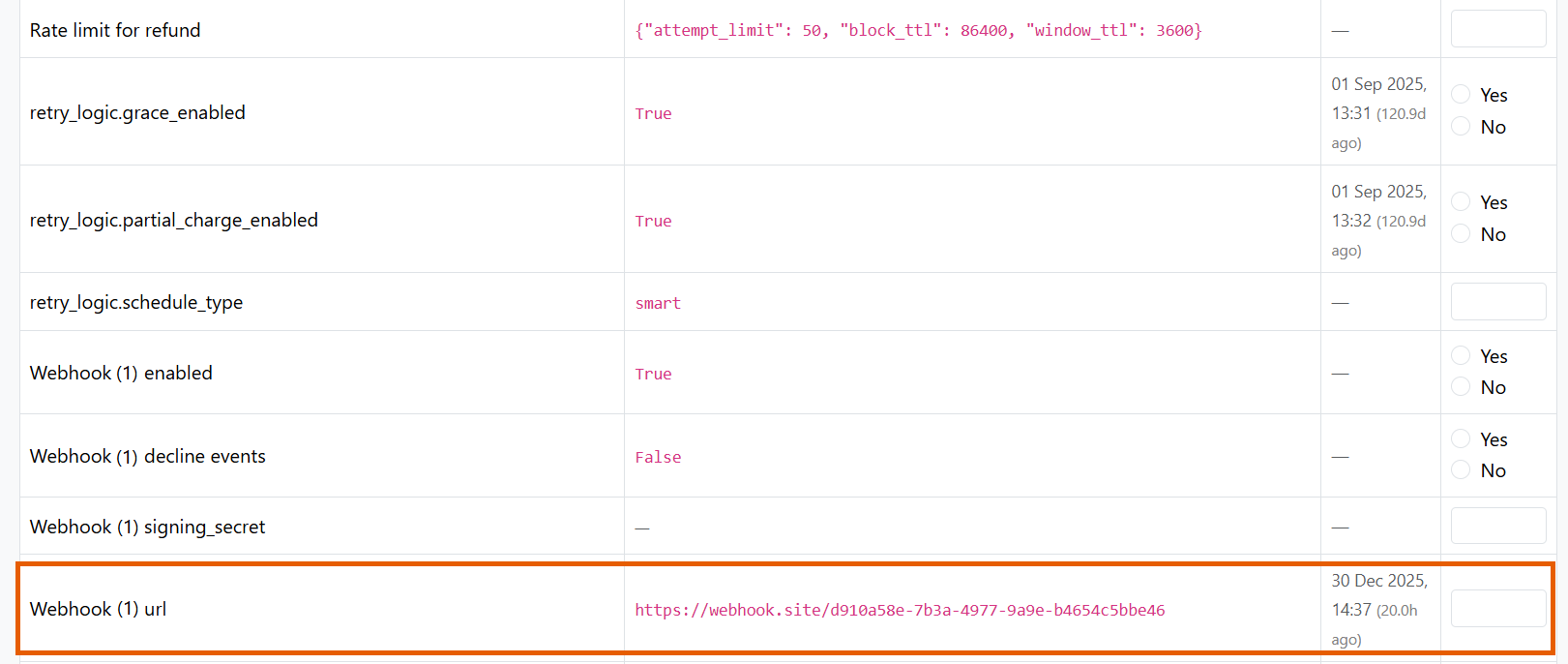
2
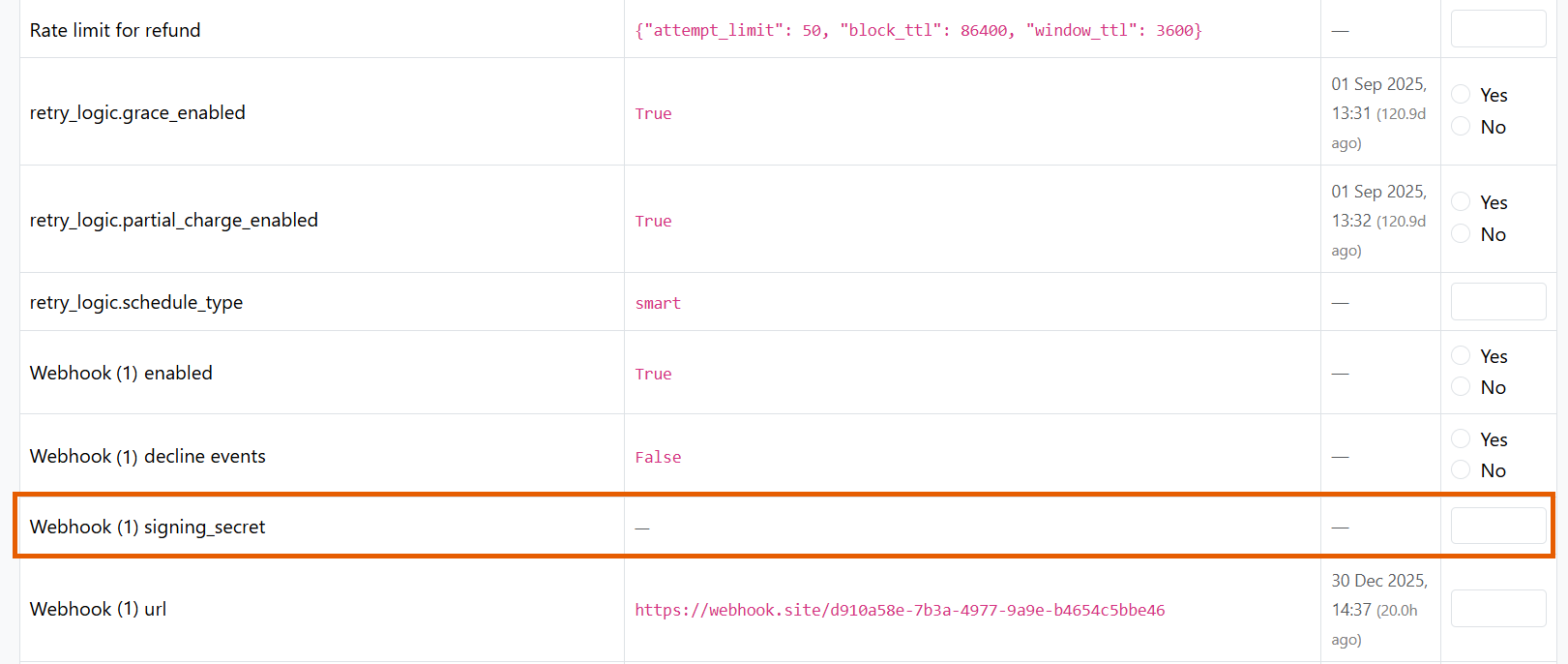
(Optional) Turn on signatures
3
Handle events
Parse the JSON payload and return a 2xx response (for example
200) to acknowledge it.4
Deduplicate deliveries
Webhooks may be retried. Use
event_timestamp from the payload as a unique key to detect and ignore duplicate events.5
(Optional) Add additional URLs
Use additional fields, such as Webhook url (2), if you want to send webhooks to multiple destinations, for example production and sandbox.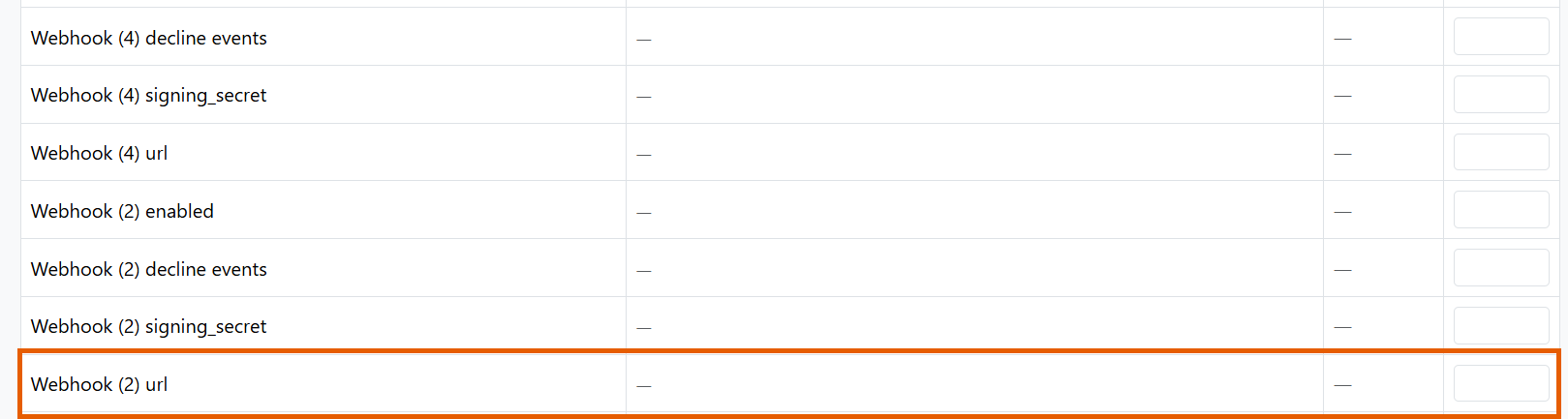
Event types
FunnelFox Payments sends webhooks for these events:Order events
Subtypes:
settled- Payment completed successfullydeclined- Payment failed or was rejectedsuccess- Order reached its first paid state (off by default)
Subscription events
Subtypes:
starting_trial- Trial period startsconvertion- Trial converts to paid subscriptionrenewing- Subscription renews (regular charge)unsubscription- User cancels subscription (auto-renewal disabled)planning_postponed_subscription- Subscription with UPCOMING status scheduled to start when delayed_start migration is usedpausing- Subscription pauseddefering- Next charge date postponedresuming- Paused subscription resumesrecovering_autorenew- Auto-renewal restored after failureexpiration- Subscription expiredunknown- Unknown or unclassified eventstart_grace- Grace period starts after failed chargestart_retry- Retry attempts start without grace periodfinish_grace- Grace period endsrecovering- Recovered from grace/retry state
One-off events
Subtypes:
granted- Access grantedrevoked- Access revoked
Refund events
refund - Sent when a refund is completed for an order.User events
Subtypes:
update_email- User’s email address was updated
Dispute events
Subtypes:
opened- A dispute was registered for an order
Order success event
Thesuccess order subtype lets you act on an order the moment it first
reaches a paid state, instead of waiting for settlement to finish. Use it
when you want to grant access or provision faster.
When enabled, FunnelFox Payments sends one success event per order as soon
as the order reaches its first paid state (authorized, settling, or
settled), and it replaces the settled event for that webhook target. The
event is off by default.
Even when the top-level
subtype is success, the order.status field in
the payload still reflects the order’s real status at the moment the event
is sent, so it can be authorized, settling, or settled.success order event:
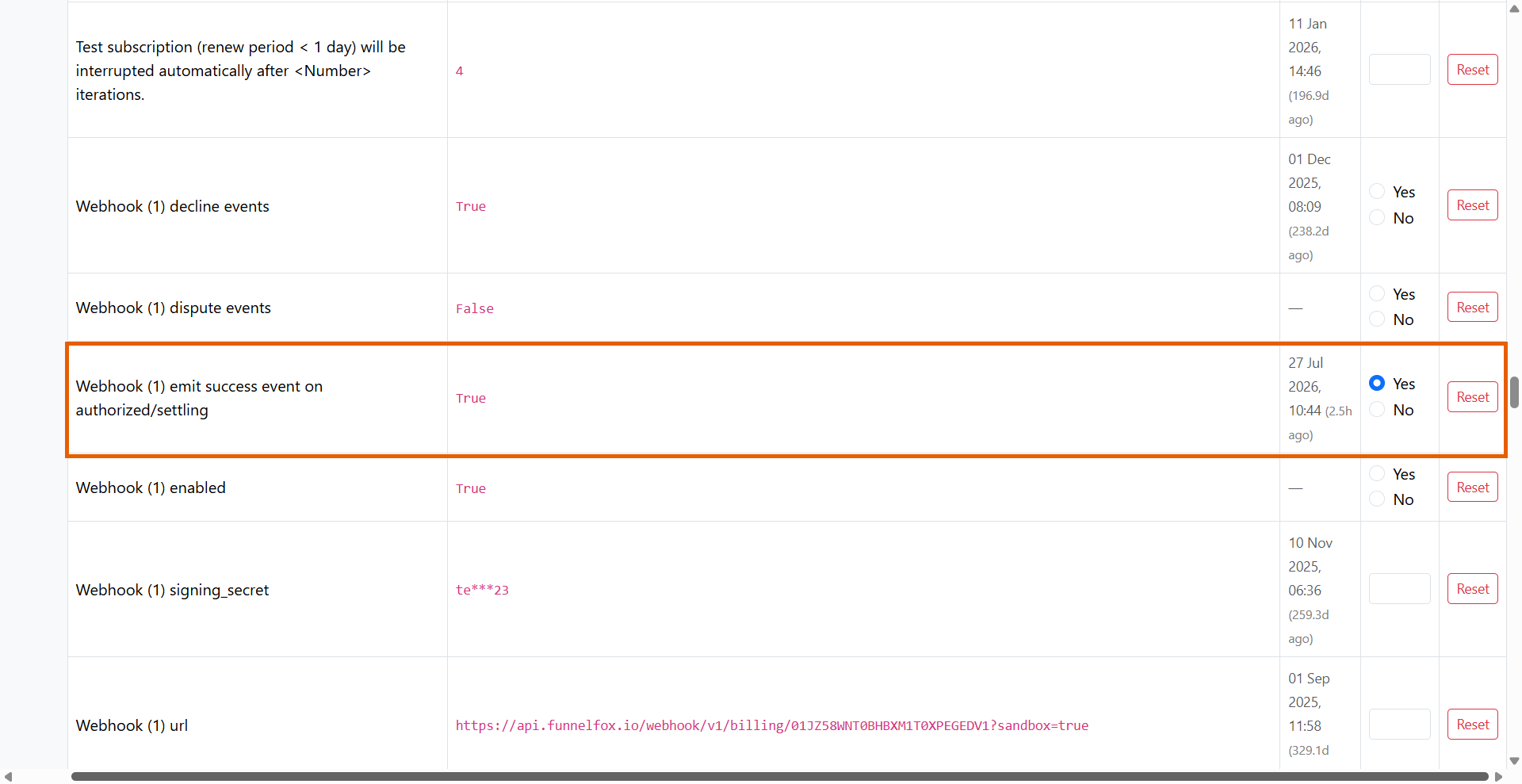
- Go to Settings in your FunnelFox Payments dashboard.
- Set emit success event on authorized/settling to True.
- Hit Enter to save changes.
Verification
FunnelFox Payments supports webhook signature verification to ensure requests are authentic. To enable signature verification:- Go to Settings in your FunnelFox Payments dashboard.
- Add a secret key in the Webhook signing_secret field.
- Click Submit.
ff-webhook-signature header with each webhook request containing an HMAC SHA-256 signature of the payload.
Optionally, you can verify the signature by computing the HMAC SHA-256 hash of the raw request body using your secret key and comparing it to the received signature. For example:
Retry logic
If your endpoint fails to respond with a 2xx status code (for example, server downtime or errors), FunnelFox Payments automatically retries delivery up to 6 times with exponential backoff.Retry schedule
FunnelFox Payments uses the following retry intervals (in seconds):- Attempt 1: ~8 seconds
- Attempt 2: ~1 minute
- Attempt 3: ~8.5 minutes
- Attempt 4: ~1.1 hours
- Attempt 5: ~9 hours
- Attempt 6: ~72 hours (3 days)
Delivery is considered successful when your endpoint returns any HTTP 2xx status code. Retries continue until success or the maximum number of attempts is reached.
Failed deliveries
You can view all failed webhook deliveries and their retry details in the Webhook Events section of any User information page in the Support Tool.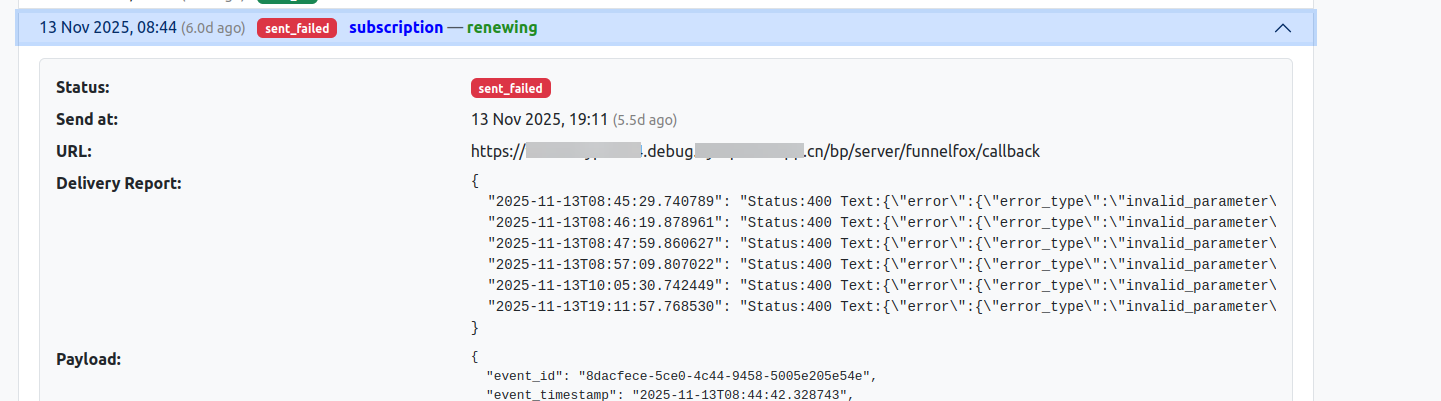
Rate limits
Detailed documentation is coming soon!